
Storytelling is changing fast, and AI is now a creative partner instead of just a tech tool. With the right AI tools, you can turn a small idea into a script, story, or scene in minutes without losing your own voice.
Think of it this way:
You bring the imagination. AI brings the speed. Together, you shape better stories.
These AI tools for storytelling help you spark new plot ideas, build characters, refine dialogue, and even design entire worlds. They’re fast, easy to use, and great for creators who want to save time but keep their personal style intact.
By the end of this article, you’ll learn:
- Why AI storytelling tools matter today
- How to choose the right tool for your creative style
- A simple breakdown of the top 10 platforms, including their features, pros, cons, pricing, and who they’re best for
So whether you’re stuck with writer’s block, planning a large fictional universe, or trying to format a detailed script, an AI tool for storytelling can be your most helpful co-pilot.
What are AI Storytelling Tools?
AI storytelling tools are software platforms powered by natural language processing (NLP) and generative AI models. They assist in creating stories, scripts, and creative content by generating text, structuring plots, or enhancing dialogue.
Key capabilities of AI tools for Storytelling
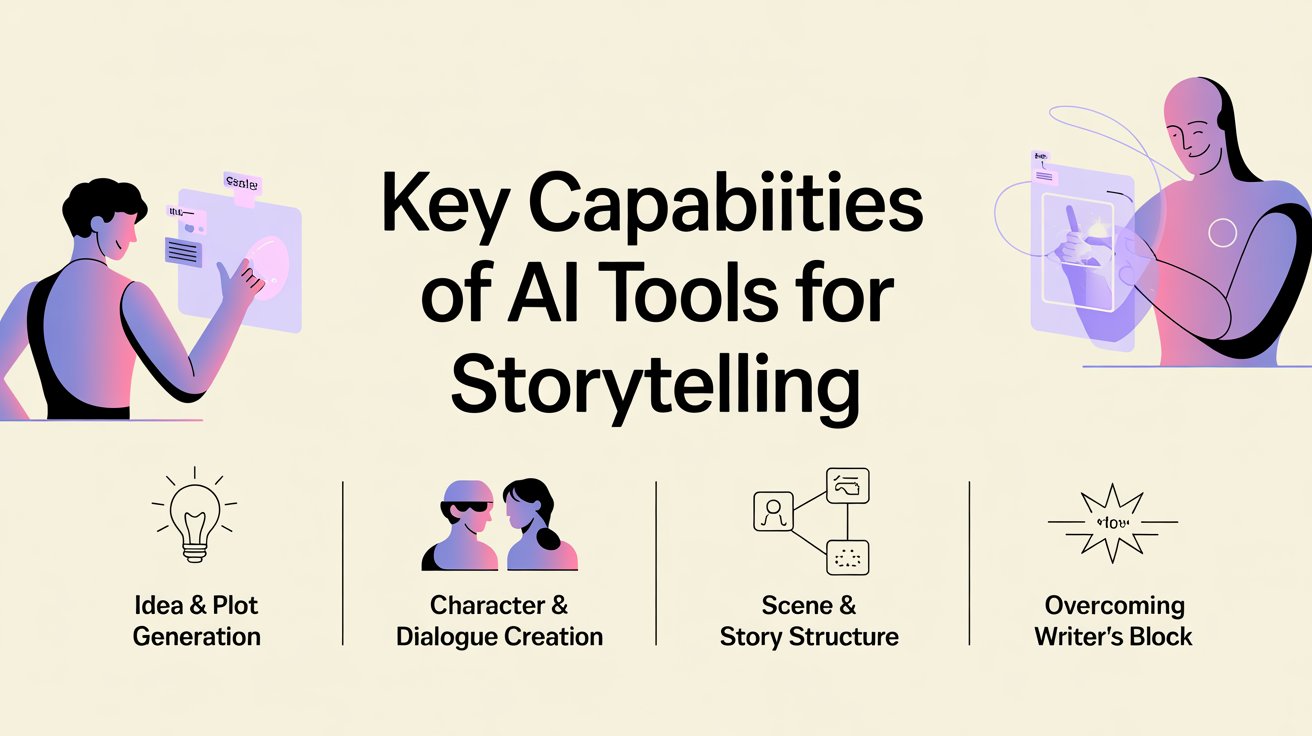
💡 Spark ideas and develop plots
They help you come up with new concepts, rewrite scenes, explore different twists, and build stronger storylines. You can even create excellent viral video ideas with easy steps if you have the right tool, such as Freezur.
🧑🤝🧑 Build characters and craft dialogue
These AI tools for storytelling generate character profiles, personality notes, and natural-sounding conversations.
🏗️ Shape scenes and structure your narrative
They expand short outlines into complete scenes and offer suggestions for smoother story arcs and chapter flow.
🚫 Beat writer’s block instantly
Providing contextual, on-demand suggestions to keep the writing momentum going.
Unlike traditional writing software, these AI tools for storytelling platforms not only correct mistakes but also generate new content based on your objectives. That makes them powerful helpers for writers, filmmakers, marketers, and content creators who want a fresh creative boost.
Who Benefits from AI Tools for Storytelling?
▶️ Authors & Novelists: Breaking through writer’s block on long-form projects.
▶️ Screenwriters & Filmmakers: Automating industry-standard formatting and generating visual storyboards.
▶️ Marketers & Content Creators: Crafting compelling brand narratives and long-form articles.
▶️ Game Designers building interactive worlds
AI Tools for storytelling, such as Freezur, generate unlimited viral videos with multi-AI integration, and other steps are also included.
How to Choose the Right AI tools for storytelling
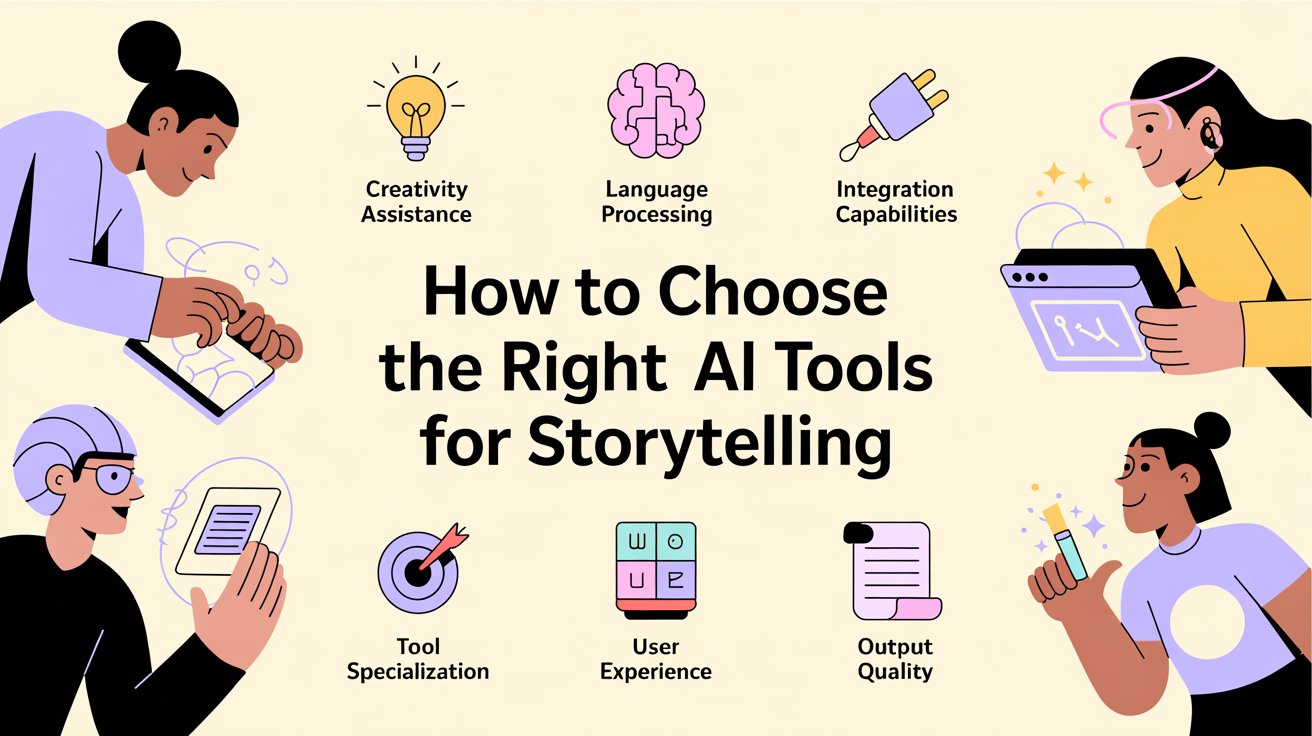
Picking the best AI tools for storytelling depends on what you create, how you write, and the kind of help you want. Here are the key things to look for:
1. Creativity Assistance
As a result, you must select AI tools for storytelling that can generate ideas, develop characters, and adapt to different genres. The best ones will surprise you with fresh, creative prompts. Freezur is an all-in-one tool that offers everything from idea generation to video creation.
2. Language Processing Power
Look for an AI that understands context, follows your tone, and can match your writing style. It should help you create smooth, clear, and engaging stories.
3. Integration Capabilities
When choosing the best AI tools for storytelling, you should consider each one and ensure that it works with Google Docs or Final Draft. Bonus points for collaboration tools, API choices, and simple exports.
4. Specialization
You are also aware that you should choose an AI storytelling tool based on your medium and desired outcome.
- Fiction: deep character and world-building
- Scriptwriting: formatting and scene structure
- General-purpose: flexibility for mixed projects
5. User Experience
Choose a clean, intuitive interface that is simple to learn, well-documented, and customizable to your workflow. With the right AI tools for storytelling that can be easily handled and executed, you will achieve the desired results.
6. Output Quality
Top tools generate natural, consistent prose tailored to your tone, requiring minimal editing and boosting your storytelling.
A. Creativity Assistance - Does it inspire new ideas or character arcs?
B. Language Processing Power - Can it understand tone, pacing, and narrative style?
C. Integration Capabilities - Works with tools like Scrivener, Final Draft, or Google Docs
D. Specialization - Fiction, non-fiction, or screenwriting focus
E. User Experience - Simple interface with minimal learning curve.
F. Output Quality - Generates coherent, natural, non-generic prose.
Top 8 AI Tools for Storytelling & Scriptwriting
Tool #1: Freezur (The Ultimate Viral Video Maker)
Overview

Freezur is an all-in-one AI tool for storytelling built for creators who want strong support in shaping stories. It excels at creating viral, short-form, storyteller-style scripts for TikTok, Reels, and YouTube Shorts with its powerful "Brainrot Engine," which is intended to increase watch time.
The platform focuses on clear story structure, stable characters, and genre-specific guidance. This makes it helpful for both long fiction projects and scriptwriting.
Pros
✔️ Offers many AI tools for writing, rewriting, and brainstorming.
✔️ Supports team collaboration.
✔️ Works well for both short and long storytelling formats.
✔️ Easy export options for popular writing tools
✔️ Gets frequent updates and new features
Cons
❓ It can feel a bit advanced for brand-new users.
Ideal For
Content creators who handle big, detailed stories need solid tools for character management and story structure.
Tool #2: Sudowrite (The Fiction Specialist)
Overview

Sudowrite is designed especially for fiction writers. It helps you grow scenes, add vivid descriptions, and get past writer’s block using its creative “magic tools.”
Known for features like Describe (which adds rich sensory details) and tools such as Expand and Rewrite, Sudowrite aims to help you write emotional, expressive, and immersive prose.
Pros
✔️ Made specifically for fiction and storytelling
✔️ Offers genre-based suggestions that match your style
✔️ Learns your writing style and voice
✔️ Has an active fiction-focused community
Cons
❓ On the expensive side for casual writers
❓ Best for fiction; not ideal for non-fiction or technical content
❓ Word-credit pricing can feel restrictive.
Ideal For
Novelists, short-story writers, and fiction authors who want AI support built specifically for creative prose and storytelling.
Tool #3: NovelAI (The Flexible & Private Option)
Overview

NovelAI takes a unique approach by offering a highly customizable AI writing experience with strong privacy protections. Unlike some AI tools for storytelling platforms, NovelAI emphasizes that your stories remain private and aren't used to train their models.
Pros
✔️ Can create custom AI modules for specific genres or writing styles
✔️ Includes AI image generation for story visualization
✔️ No content restrictions for creative writing.
✔️ Subscription includes unlimited generations
Cons
❓ The interface can feel complex for new users
❓ Needs more manual setup compared to simpler tools
❓ Community content leans toward certain niche genres
Ideal For
Writers who want strong privacy, deep customization, and don’t mind a hands-on, more technical setup for their AI writing process.
Tool #4: Claude (The Conversational & Long-Context Genius)
Overview

Claude (that's me!) represents a different approach to AI storytelling assistance.
It can handle long scripts, full scenes, and complex story prompts. Its long-context ability makes it great for rewriting or building multi-chapter stories. The conversational interface makes it feel like brainstorming with a knowledgeable writing partner.
Pros
✔️ Excellent at structural analysis and plot development
✔️ Strong character development and dialogue assistance
✔️ Can work across multiple genres and formats
✔️ Thoughtful, nuanced creative suggestions
✔️ Web search integration for research assistance
Cons
❓ Needs more back-and-forth chat instead of one-click output
❓ No built-in story organization or version tracking
❓ You have to transfer completed text to your writing app manually.
Ideal For
For large, complex projects that require a deeper understanding rather than quick, one-shot generation, writers who want a smart creative partner to brainstorm with, refine structure, and receive meaningful feedback are ideal.
Tool #5: Blogi (the Multi-AI Smart Writer)
Overview

Blogi is designed for creators who blend storytelling with content marketing. It’s great for bloggers, digital marketers, and creators who need to craft engaging content fast.
When it comes to crafting compelling blog posts, social media narratives, and marketing copy that draws readers in with straightforward storytelling strategies, this AI storytelling tool excels.
Pros
✔️ Built-in SEO tools to help content rank
✔️ Ready-made templates for different content types
✔️ Helps keep your brand voice consistent
Cons
❓ Advanced features limited to premium plans
Ideal For
Bloggers, marketers, and digital creators who want to produce quick, engaging, story-style content rather than writing long novels or screenplays.
Tool #6: Copy (The Copywriting Storyteller)
Overview

Originally designed as a marketing copy tool, Copy has developed into a powerful artificial intelligence tool that helps companies and brands tell stories.
It creates product stories, brand narratives, and marketing content that engages readers through simple storytelling. While not designed for novels or scripts, it excels at short, sharp, commercial storytelling.
Pros
✔️ Great for brand stories and marketing-focused narratives
✔️ Offers many templates for different content needs
✔️ Supports multiple languages
✔️ Fits smoothly into marketing and content workflows
Cons
❓ Not made for long fiction or screenwriting
❓ Content can feel repetitive if used too often
❓ Best for business storytelling, not creative writing
Ideal For
Marketing professionals, brand managers, and content teams who need to create compelling product stories, brand narratives, and marketing content with strong storytelling elements.
Tool #7: ShortlyAI (Best for Overcoming Writer's Block)
Overview

ShortlyAI keeps things simple. With its clean interface and smart text continuation, it helps you move your story forward without any complicated tools.
You type a line or a short paragraph, click a button, and the AI continues writing in the same flow. It’s perfect for those moments when you know the direction but not the exact words.
Pros
✔️ Super simple, distraction-free writing space
✔️ One-click story continuation
✔️ Understands context and keeps the narrative consistent.
✔️ Offers rewrite commands for different ways to phrase ideas
Cons
❓ No built-in planning, outlining, or organization tools
❓ Limited genre customization
Ideal For
Perfect for writers who experience writer's block and want quick, easy AI assistance that keeps words flowing without the complexity of more complex, feature-rich storytelling tools.
Tool #8: AI Dungeon (Best for Interactive Storytelling & Gaming)
Overview

AI Dungeon is one of the first platforms to bring AI into interactive fiction. Instead of writing in a straight line, you get a “choose your own adventure” experience where the story changes based on your choices in real time.
Even though it began as a game, many writers now use it to explore story ideas, test character decisions, and see how different plot paths might play out.
Pros
✔️ Offers a unique, interactive storytelling experience
✔️ Fun and engaging way to break writer’s block
✔️ Lets you create custom worlds and scenarios
✔️ Great for experimenting with plot branches
Cons
❓ AI output can be uneven and may need extra editing
❓ You get less control over the story’s direction
Ideal For
Writers who want to explore their stories interactively, test narrative branches, experiment with character decisions, or use gamification to overcome writer's block and discover new plot possibilities.
Future Trends in AI Tools for Storytelling
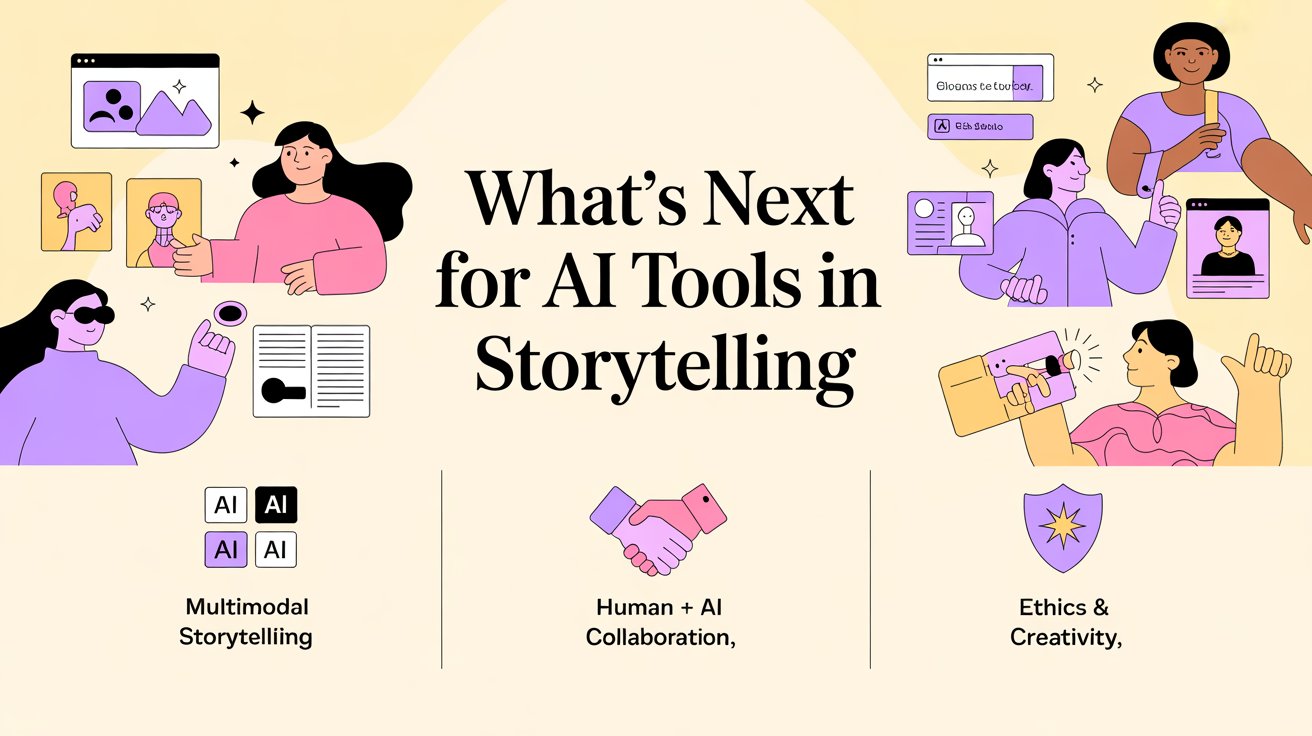
1. Multimodal Storytelling
AI is moving beyond plain text and now connects words with visuals and sound. Future AI tools for storytelling will allow creators to:
✅ Generate scenes with matching imagery, music, and voiceovers
✅ Edit text and instantly update visuals
✅ Turn stories into interactive video, VR, or podcasts
Storytelling is becoming multi-format, with a single idea giving rise to many creative outputs. With tools like Freezur offering multi-AI features, voiceovers, and idea-to-execution support, creators can bring stories to life in more ways than ever.
2. Human + AI collaboration
The future isn’t about AI replacing writers; it’s about teamwork. AI storytelling tools are evolving into beneficial creative collaborators that can:
✅ Brainstorm ideas with you in real time
✅ Learn your writing tone and adapt to your style
✅ Give feedback like a supportive writing coach
You can stay in control of the story while AI helps speed up the process and boosts your creativity.
3. Ethics and Creativity
Important questions still need to be answered as AI develops:
✅ How do you protect originality and authorship?
✅ Can AI enhance unique voices instead of diluting them?
✅ Who owns AI-assisted work, and how should it be credited?
The objective is to use AI creatively and responsibly while keeping human imagination at the core of the narrative.
Conclusion
AI tools for storytelling aren’t here to replace your creativity; they’re here to boost it, speed it up, and make the whole process easier.
Storytelling is changing fast, and these tools are opening new doors for writers, filmmakers, and marketers who want more ideas, better structure, and quicker results.
The goal isn’t to let AI take over. It’s to use AI as a creative partner that strengthens your voice.
Start by exploring tools like Freezur for video storytelling, idea generation, and script creation, or use tools like Claude for deep brainstorming and long-form support. Find the one that fits your style and helps you bring your stories to life.
These top platforms get better the more you use them. Your story is waiting. The tools to help you create it are already here.
Now it’s your turn to begin.
FAQs About Best AI Tools for Storytelling
Q1. Will AI tools for storytelling replace human writers?
A: No. Current AI tools are best used as assistants for brainstorming, outlining, refining, and generating raw drafts. They lack the emotional depth, personal experience, and intentional thematic control that define great human writing.
Q: Can these tools help with complex plot issues?
A: Absolutely. Freezur, Sudowrite, and Claude are examples of AI tools for storytelling that excel at detecting plot holes, suggesting alternative twists, and maintaining consistency with complex character or world rules over the course of a long story.
Q: Will using AI tools make my writing sound generic or robotic?
A: Not if used properly. Modern AI storytelling tools, especially advanced platforms like Sudowrite, Claude, and NovelAI, can generate natural-sounding prose that matches your style.
Q: Are AI tools for storytelling suitable for beginners or only for experienced writers?
A: Both! AI tools can benefit writers at every level. Beginners can use them to learn story structure, see examples of effective description and dialogue, and build confidence.